


Condos within 1km of a popular primary school are not always the better buy. A new Stacked Pro series compares two- and three-bedders near Ai Tong School and Methodist Girls School. Whether you're a seasoned property investor or buying a home for the first time, you're likely aware that the Home-School Distance (HSD) category used by the Ministry of Education (MOE) can be a major factor in the property decision-making process. Finding a home that is within one kilometre of a primary school provides priority enrolment, after other factors like siblings and parent volunteerism are taken into account. This means that the HSD category doesn't just mean a home that is a short trip from school — it could be a significant contributor to the value of the property. The problem is you also can't reduce this to something as simple as "near school = higher gains." Not all properties see uniform benefits from being within 1km of a primary school, and when there are multiple condos within this distance, comparisons get tricky.
Why the HSD matters
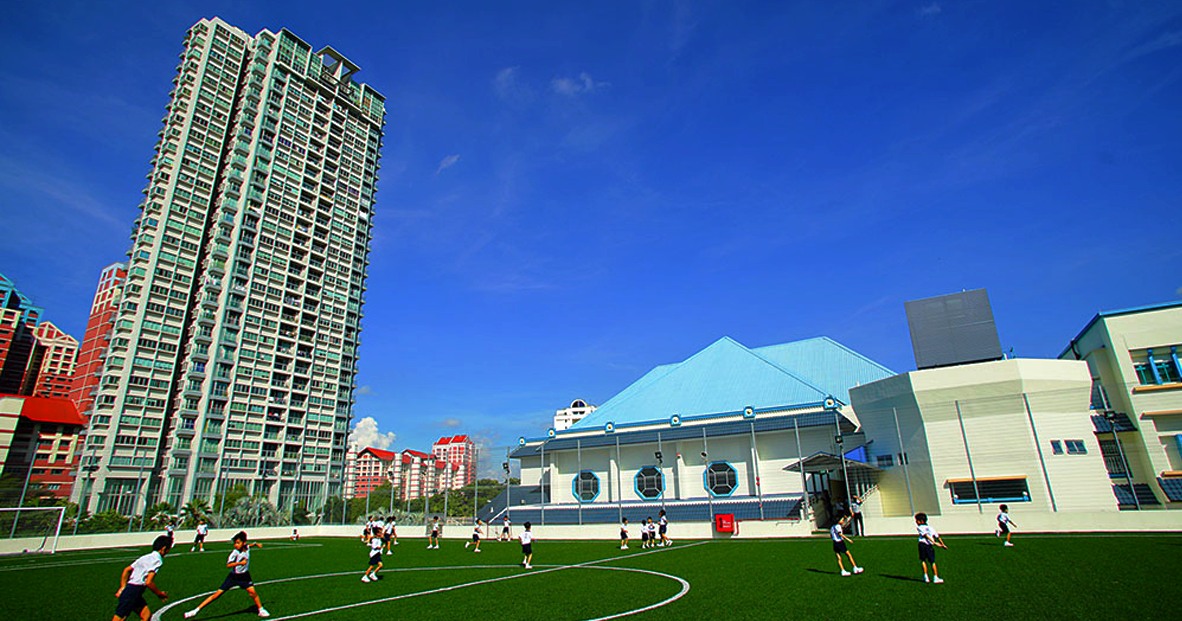
Under the prevailing Primary 1 Registration framework, HSD matters when a school is oversubscribed and has to resort to balloting. Singapore Citizens who live in a property within one kilometre of the school are given priority over those who live between 1km and 2km away. Remember that this only applies to primary schools; enrolment to secondary and tertiary schools is often determined by academic results and other related factors. A property that sits within 1km of a primary school continues to enjoy the proximity benefits even after your children leave the school, or even if you don't have children. Properties near desirable schools tend to see consistent buying and leasing demand, compared to others further away. Some investors capitalise on this, since some families may rent a property that is within the 1km radius just to have the right address to ensure that their children can enrol at the school of their choice.
The complications of identifying HSD effects
Property prices move for a variety of reasons. A property purchased when market sentiment is weak — and thus translates to a lower selling price — could eventually reap stronger gains compared with another property purchased at the peak of market sentiment. Likewise, condos with low transaction volumes may not properly reflect true demand or growth from the school. Other factors may also influence performance, such as a 99-year leasehold versus freehold tenure, or a unit mix not catered to families. A condo may be near a school, but if the bulk of units are two-bedders that are too small for families, that may mitigate the advantage.
How to properly compare condos within the HSD
The starting point is to avoid treating every condo within a one-kilometre circle as interchangeable. Here's how to do it properly.
Check the postal code. In some developments, only certain blocks may fall within the qualifying distance. An example is Jadescape, where only two of the seven blocks fall within the HSD to Ai Tong School. In some situations, this can explain performance discrepancies between certain stacks in the same project. Units within the HSD may see stronger gains or more resale transactions versus other similar layouts and sizes in the same project. For buyers, check this using the postal code on OneMap.sg rather than solely relying on sales pitches or marketing materials. For new launch projects, buyers may have to wait for actual confirmation of the one-kilometre distance.
Compare like for like. Prices, sizes and layouts need to be assessed separately for each unit type. This is especially true for family-oriented condos within the HSD. Even if two-bedroom units are much cheaper than three-bedroom units, that doesn't mean it's the right product for families. Conversely, two-bedders may sometimes see strong buying demand because, in older projects, this unit type may match the average size of new three-bedroom units. The age of a development is also a factor, especially for leasehold projects. Sometimes a larger three-bedder is cheaper despite being within the HSD, but this is because it's a much older development than the surrounding alternatives.
Consider transaction volumes, not just prices. This is especially challenging for smaller condo projects, where sales may be infrequent. Projects with very few transactions can produce misleading averages. If there are just two transactions recorded that year, it is difficult to tell if the transacted price reflects proximity to the school or is an outlier. Compare between projects with at least five recorded transactions within the past 12 months. Use URA transaction records once you've shortlisted the appropriate properties.
Review the actual floor plans. Units at older projects may have higher square footage, but there's a good chance that this includes balconies, air-con ledges or enclosed outdoor spaces. Conversely, newer projects may seem smaller, but the square footage may more accurately reflect usable space, and more efficient layouts (like dumbbell layouts) could actually mean more room. The design of a unit can sometimes explain differences in resale performance between two or three projects close to the same school. Since they're all within the HSD, the differences then come down to fine details such as the unit itself.
The bottom line
Buying within 1km of a popular primary school can offer enrolment priority and sustained demand, but it's not a guarantee of better value. Not every block in a development qualifies, not every unit type suits families, and low transaction volumes can distort price comparisons. Check postal codes, compare like for like, review transaction volumes and study floor plans before committing. The right condo is the one that fits your family's needs and your financial goals — not simply the one closest to the school gate.
Advertisement
Advertisement
 Popular
 Hot
Advertisement


